
The Deep History and Hidden Secrets of the Bank of Japan


When people think of Tokyo’s Nihonbashi district, they often picture historic bridges and upscale department stores. However, nestled quietly in the heart of this area sits the powerhouse of the nation’s economy: **The Bank of Japan (Nippon Ginko)**. Founded during a time of intense modernization, the BOJ is not just a regulatory body—it is a living museum filled with architectural mysteries, samurai-era roots, and mind-boggling vault secrets. Let’s dive deep into the fascinating history of Japan’s central bank.
1. Three Mind-Blowing Facts About the BOJ
Before looking at its history, let’s explore the unexpected quirks that make the Bank of Japan truly unique:
The “Yen” Shape from Above
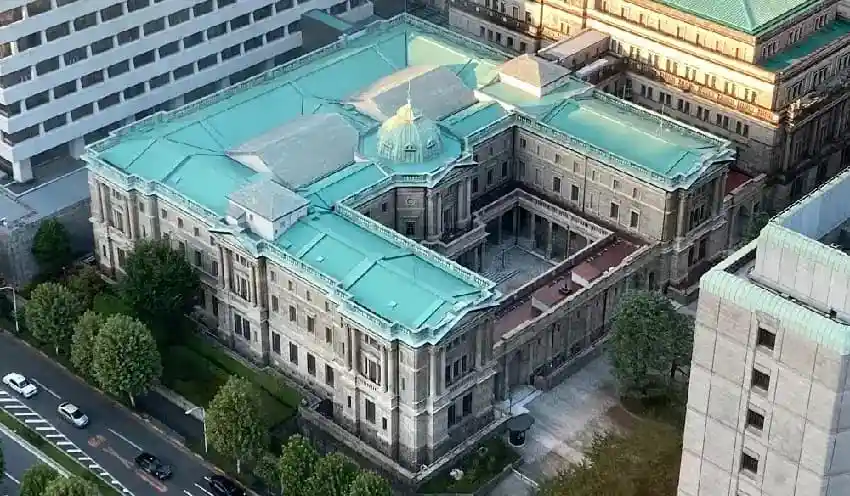
If you look at the historic Main Building of the BOJ from a satellite view or an airplane, it perfectly resembles the kanji character for Yen (**円**). While the bank claims this was a pure coincidence because the building was expanded later, historians still debate whether it was a stroke of architectural genius.

Built on a Former Gold Mint
The location of the headquarters is no accident. The BOJ sits precisely where the *Kinza* (the Tokugawa Shogunate’s gold coin mint) used to be during the Edo period. The area has literally been the center of Japan’s wealth and currency creation for over 400 years.
It is Part-Privately Owned
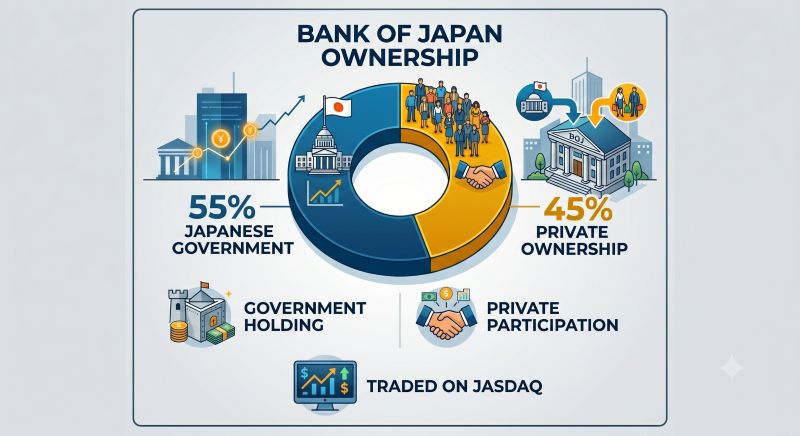
Unlike many central banks completely owned by governments, the BOJ is a special corporation. The Japanese government owns 55% of its capital, but the remaining 45% is owned by private individuals and organizations, and its “shares” are even traded on the JASDAQ market!
2. The Evolution: From Samurai Chaos to Global Titan
To truly understand the Bank of Japan, we have to travel back to the late 19th century—a chaotic era when Japan was rapidly transitioning from a closed samurai society into a modern global power.
The Samurai Currency Chaos (1880s)
Before the BOJ was born, Japan’s financial system was in absolute ruins. Feudal domains and private banks were printing their own unregulated paper money, leading to hyperinflation. To stop this financial “wild west,” the Meiji government established the BOJ in 1882 as the nation’s sole currency issuer, instantly stabilizing the yen.
The Unshakable Neo-Baroque Fortress (1896)
In 1896, the iconic Main Building in Nihonbashi was completed. Designed by Tatsuno Kingo (the legendary architect behind Tokyo Station), this masterpiece was built like a literal fortress. Thanks to its advanced iron-frame structure, it miraculously survived both the devastating 1923 Great Kanto Earthquake and the heavy bombings of World War II.
Breaking Free for True Independence (1998)
For over a century, the BOJ operated under heavy government oversight. However, a massive legal revision in 1998 changed everything. The bank was granted complete independence from the Ministry of Finance. Today, like the US Federal Reserve, the BOJ operates autonomously, making its own critical decisions to steer Japan’s economy.
💡 Quick Takeaway: The Bank of Japan isn’t just a regulatory office; it is an architectural and historical survivor that rescued Japan from monetary collapse and evolved alongside the nation’s global rise.