
ATTRACTION BY AREA
Tohoku
Tohoku is a captivating region where ancient traditions, deep history, and raw natural beauty remain beautifully preserved. From spectacular seasonal festivals to spiritual mountain temples and healing hot springs, it offers a profoundly authentic Japanese journey.
- Onsen
- Historical Sites
- Unreal Natures
- The Best Sea foods
- The Best meat of Beef
Must Visit Spots
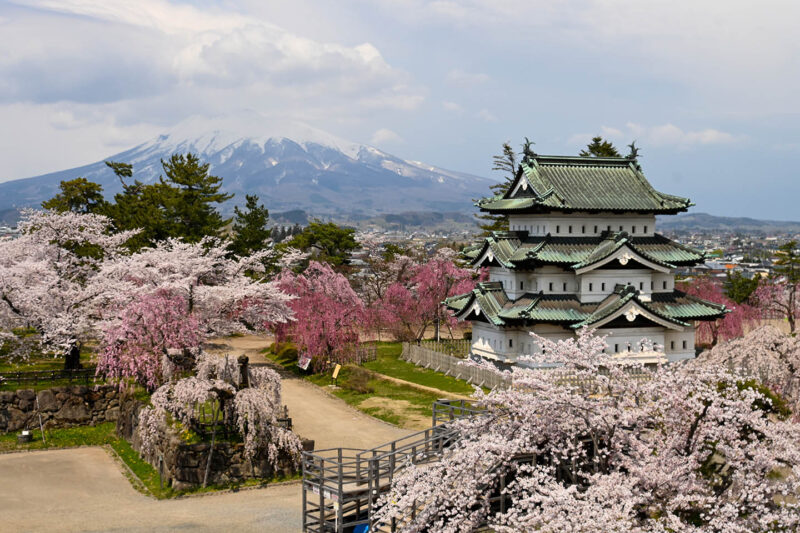
Hirosaki Park
Best Season: Spring
Surrounding the historic Hirosaki Castle built in 1611, this park is celebrated as one of Japan’s premier cherry blossom viewing spots. In spring, over 2,600 cherry trees bloom simultaneously, creating a stunning pink canopy. The highlight is the “Hana-ikada” (flower raft), where falling petals completely blanket the castle moat in a vibrant pink carpet.
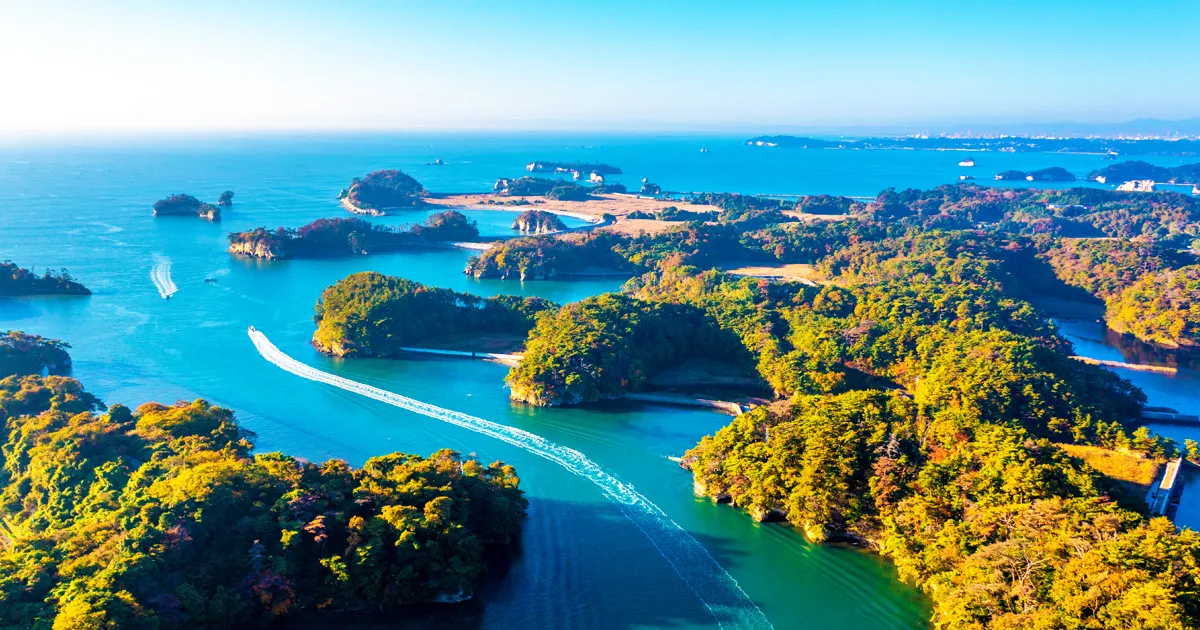
Matsushima Bay
Best Season: Autumn and Winter
Ranked as one of Japan’s Three Most Scenic Views (Nihon Sankei), Matsushima Bay is dotted with over 260 tiny, pine-clad islands scattered across calm waters. Praised by historical poets like Matsuo Basho, the bay offers a timeless landscape that can be explored via scenic cruise boats or bridges connecting to spiritual temple islands.
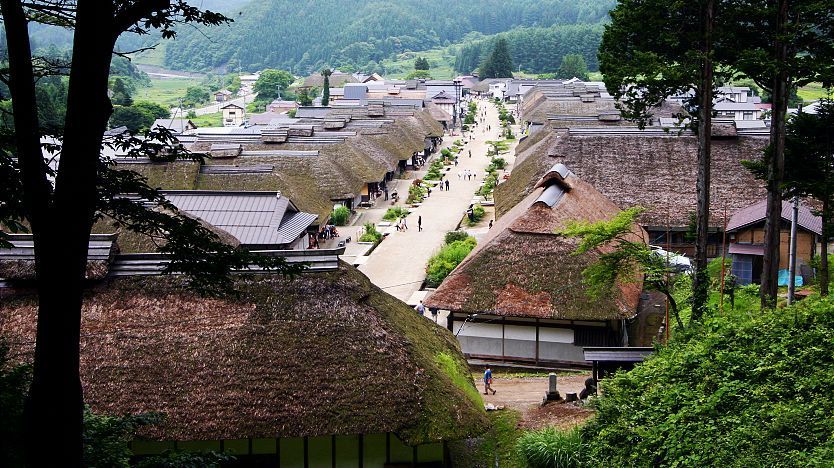
Ouchijuku
Best Season: Summer and Winter
A beautifully preserved post town established during the Edo period (1602) as a rest stop for traveling samurai and lords. The main street is lined with dozens of traditional thatched-roof houses, now serving as souvenir shops and restaurants. It offers a rare, immersive glimpse into rural samurai-era Japan, famous for its unique scallion-eating buckwheat noodles.
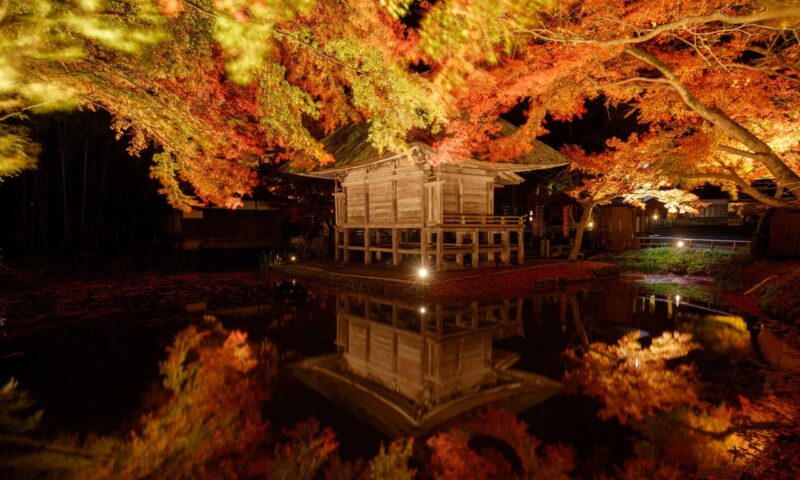
Hiraizumi Temple
Best Season: Autumn
Designated as a UNESCO World Heritage site, Hiraizumi was the golden capital of northern Japan during the 12th century, built by the powerful Oshu Fujiwara clan to represent the Buddhist Pure Land (paradise) on earth. Its crown jewel is Chuson-ji Temple’s Konjikido (Golden Hall), a breathtaking structure completely covered in gold leaf and intricate mother-of-pearl inlay.
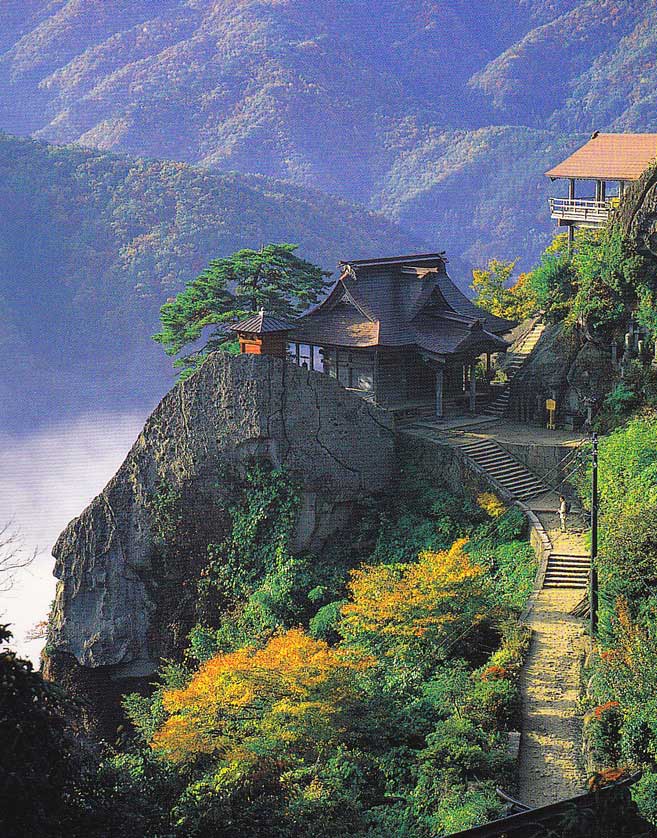
Yamadera Temple
Best Season: May to November
Officially named Rissakuji and founded in 860, this spiritual mountain temple complex clings dramatically to steep rock cliffs. Visitors climb 1,015 stone steps through a quiet cedar forest to reach the upper observatories. The reward is a breathtaking, panoramic view of the rural valley below, which inspired famous haiku poetry.
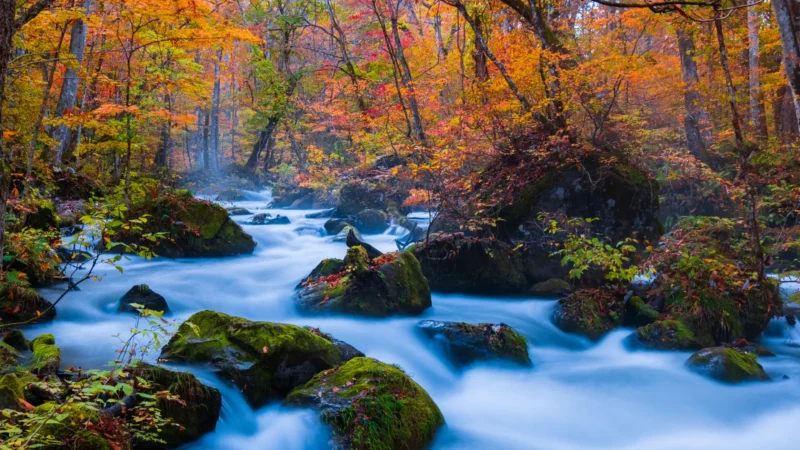
Oirase Gorge
Best Season: May to November
Flowing from Lake Towada, this 14-kilometer forested mountain stream is renowned as one of Japan’s most beautiful river valleys. The easy walking trail runs alongside crystal-clear rushing waters, moss-covered rocks, and dozens of unique cascading waterfalls. It offers an incredibly refreshing and accessible forest-bathing (shinrin-yoku) experience for nature enthusiasts.
Hidden Spots
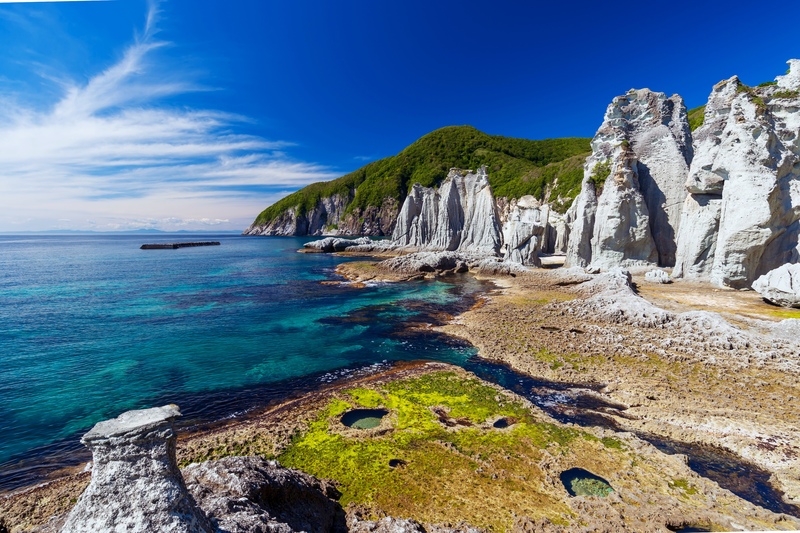
Hotokegaura Coast
Best Season: May to September
Located on the remote Shimokita Peninsula in Aomori, Hotokegaura is a 2-kilometer stretch of monolithic, white volcanic rock formations sculpted by centuries of harsh wind and waves. The name translates to “Buddha’s Shore,” as the towering green-and-white cliffs resemble statues of Buddhist deities, contrasting beautifully with the crystal-clear, turquoise sea.
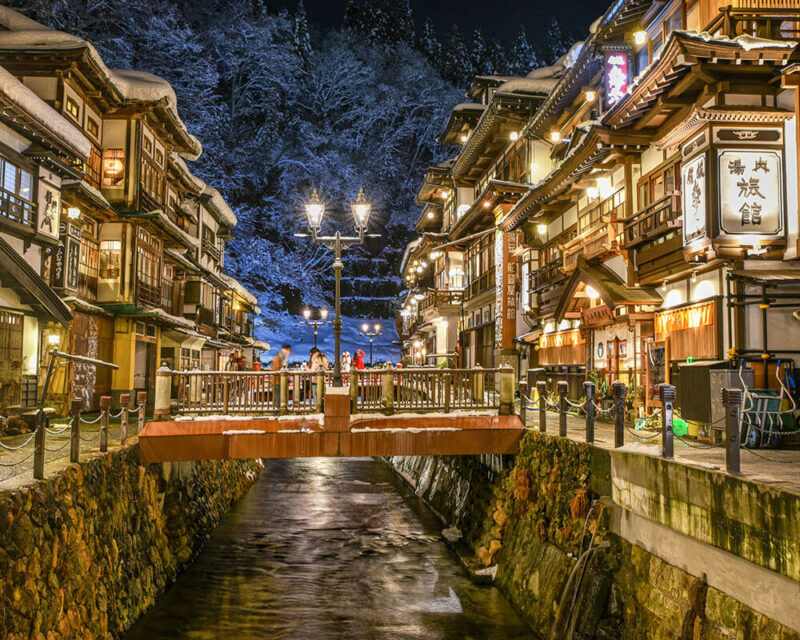
Ginzan Onsen
Best Season: Winter
Tucked away in the mountains of Yamagata, this secluded hot spring town feels like a step back into early 20th-century Japan. Originally developed as a silver mine, it is famous for its preserved three-and-four-story wooden ryokan inns lining a quiet river. At night, vintage gas lamps light up the snowy streets, creating a nostalgic, magical atmosphere.
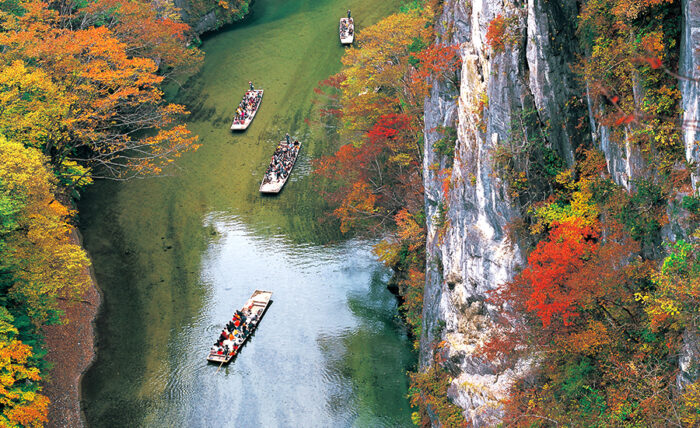
Geibikei Gorge
Best Season: May to November
Geibikei is a breathtaking 2-kilometer limestone gorge with towering 100-meter cliffs. It is famously explored via traditional flat-bottomed wooden boats propelled entirely by a single boatman using a long pole. Visitors can enjoy the serene silence of nature, broken only by the boatman singing a traditional folk song (Geibi Oike) that echoes beautifully off the stone walls.
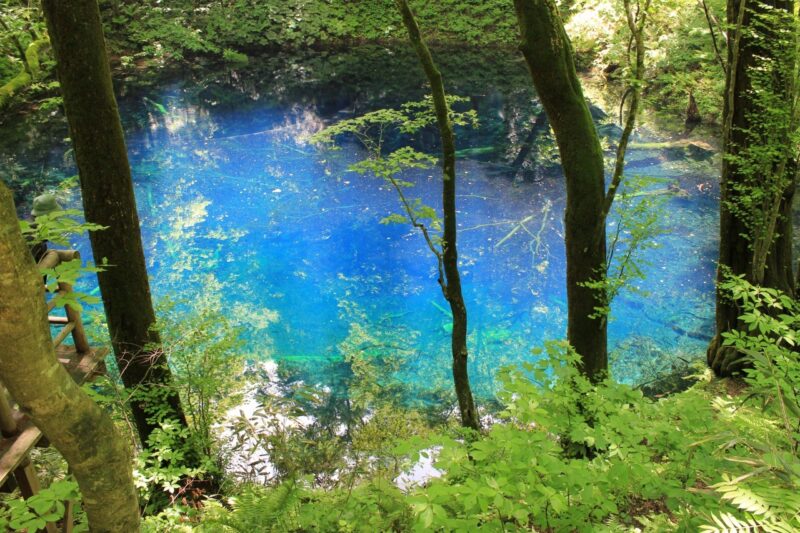
Aoike Pond in Shirakami Sanchi
Best Season: June to August
Located within the Juniko (Twelve Lakes) area on the western edge of the UNESCO-registered Shirakami Sanchi beech forest. Aoike, meaning “Blue Pond,” is world-famous for its deep, supernatural cobalt blue water. The water is so exceptionally clear that visitors can see withered beech logs resting on the pond floor 9 meters below, completely untouched by decay.
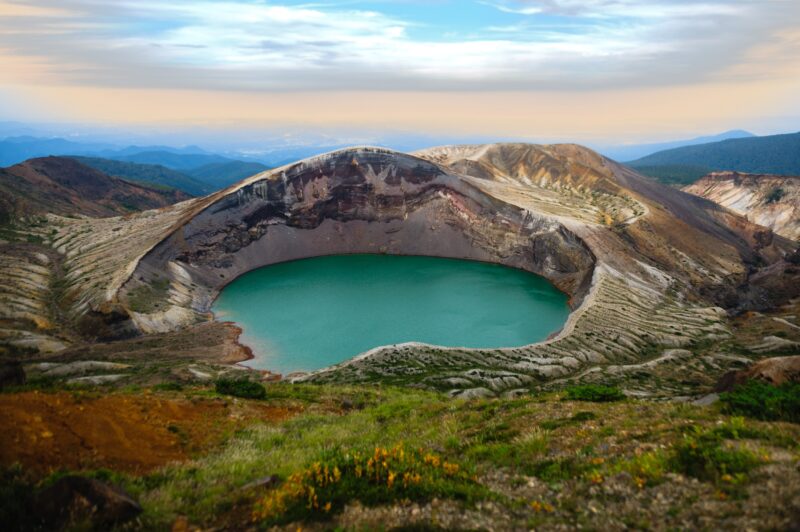
Okama Crater Lake on Mount Zao
Best Season: May to October
Situated near the summit of the active Mount Zao volcanic range, Okama is a stunning, circular crater lake named after its resemblance to a traditional Japanese cooking pot (kama). Its highly acidic waters dynamically change color from emerald green to turquoise blue depending on the sunlight and weather, earning it the nickname “Five-Color Pond.”
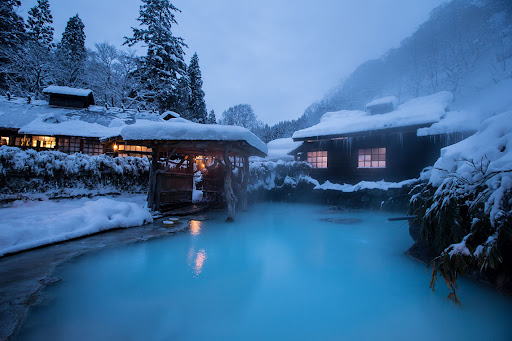
Nyuto Onsenkyo
Best Season: Winter
Hidden deep within the mountains of Akita near Lake Tazawa, this secluded valley features seven rustic hot spring inns, some operating since the Edo period. Famous as the ultimate “秘湯” (hidden, secret hot springs), the area is celebrated for its soothing, milky-white mineral waters. Relaxing in an open-air bath surrounded by thick winter snow offers a traditional, deeply peaceful healing experience.
Must Try Foods
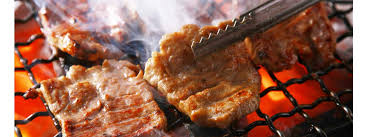
Sendai Gyutan
Born in Sendai post-World War II, this unique culinary style transformed beef tongue into a national delicacy. Unlike thin Western cuts, Sendai Gyutan is sliced thickly, aged carefully to maximize tenderness, and grilled over charcoal. It is traditionally served as a set meal with healthy barley rice and a clear, comforting oxtail soup.
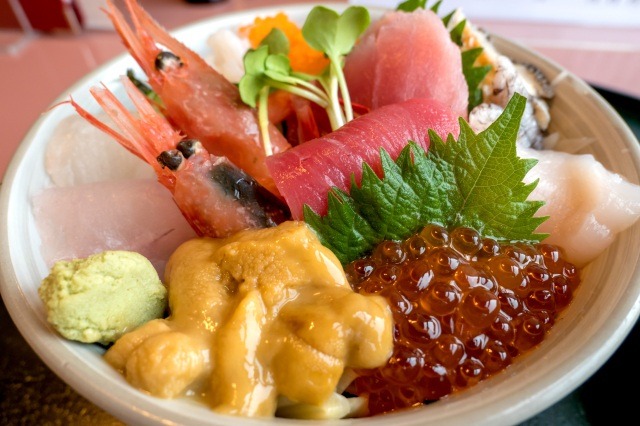
Aomori Nokke-don
Located at Furukawa Market in Aomori City, this interactive dining experience allows visitors to build their own dream seafood bowl. Guests buy a coupon ticket, receive a bowl of warm local rice, and walk around various market stalls to exchange coupons for their favorite freshly caught seafood, such as scallops, tuna, and salmon roe.
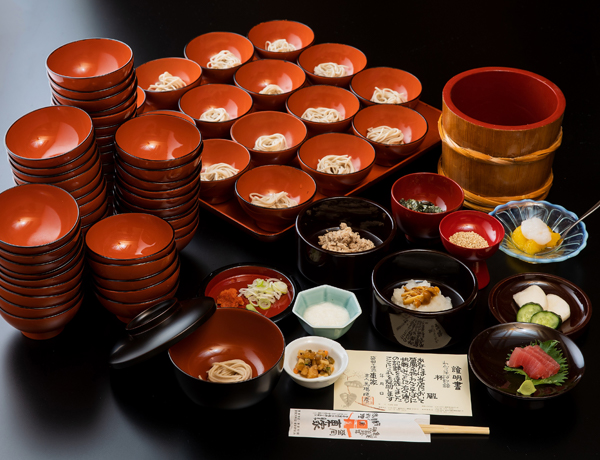
Morioka Wanko Soba
One of Iwate’s famous “Three Great Noodles,” Wanko Soba is a thrilling, interactive eating challenge rooted in traditional hospitality. Servers stand beside guests, continuously tossing bite-sized portions of buckwheat noodles into their bowls while chanting rhythmic phrases. The feast only ends when the guest managed to quickly cover their bowl with a lid.
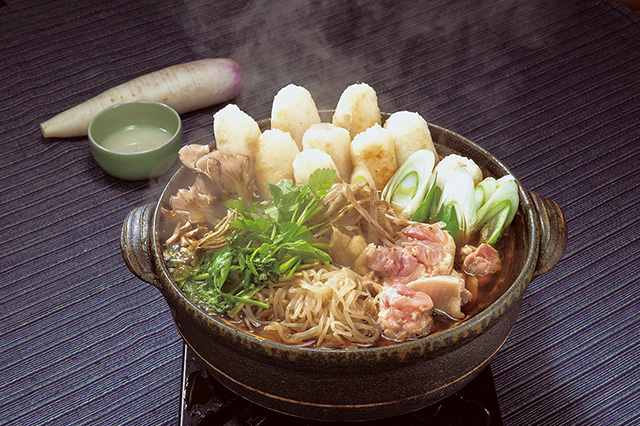
Akita Kiritanpo Nabe
A comforting winter hot pot made from freshly harvested mashed rice wrapped around cedar skewers and toasted over an open hearth. These savory rice cylinders (kiritanpo) are torn into pieces and simmered in a rich broth made from Hinai Jidori (one of Japan’s top premium chickens), along with seasonal burdock, mushrooms, and Japanese parsley.
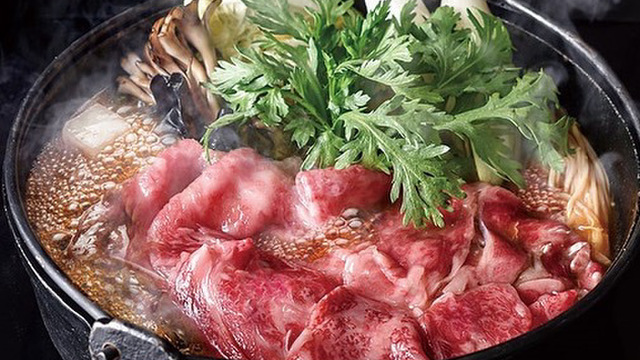
Yonezawa Beef Sukiyaki
Ranked alongside Kobe and Matsusaka as one of Japan’s top three wagyu brands, Yonezawa Beef comes from cattle raised on high-quality grains in Yamagata’s basin region, known for extreme temperature differences. This creates an exceptionally fine, melt-in-your-mouth marbling. Preparing it as Sukiyaki with sweet soy sauce accentuates its rich, buttery flavor profile perfectly.
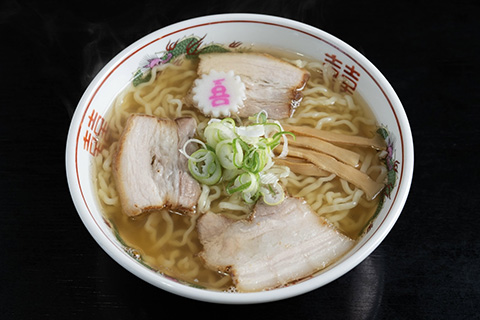
Kitakata Ramen
Hailing from a small town in Fukushima with the highest number of ramen shops per capita, Kitakata is one of Japan’s top three traditional ramen styles. It features thick, flat, and uniquely wavy noodles that contain high moisture, giving them a distinctively chewy texture. The noodles swim in a clean, deeply flavorful soy-sauce-and-pork-bone broth.