
ATTRACTION BY AREA
Kyushu
Kyushu is a dynamic, volcanic island located in southwestern Japan, famous for its incredible natural hot springs and rich historic ports. From dramatic active volcanoes to diverse international flavors, it offers a deeply vibrant cultural journey.
- Land of Active Volcanoes and Dynamic Landscapes
- Premier Hot Spring and Onsen Paradise
- Historic Gateway of International and Multicultural Exchange
- Energetic Street Food Culture and Premium Gastronomy
- Sacred Mythological Roots and Mystical Wilderness
Must Visit Spots
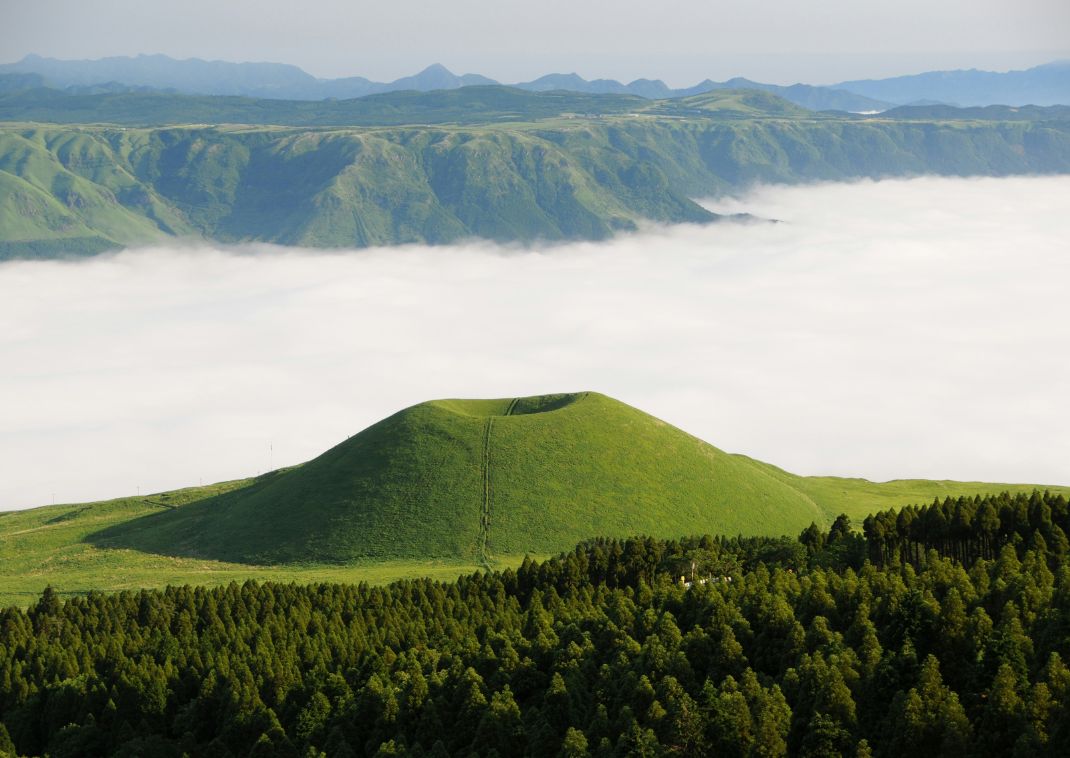
Mount Aso
Best Season: Spring to Autumn
Boasting one of the world’s largest volcanic calderas, Mount Aso is a breathtaking wonder. At its center sits Mount Nakadake, an active volcano where visitors can peer directly into a dynamic crater filled with a steaming, acidic turquoise pool, surrounded by the sweeping, majestic grasslands of Kusasenri.
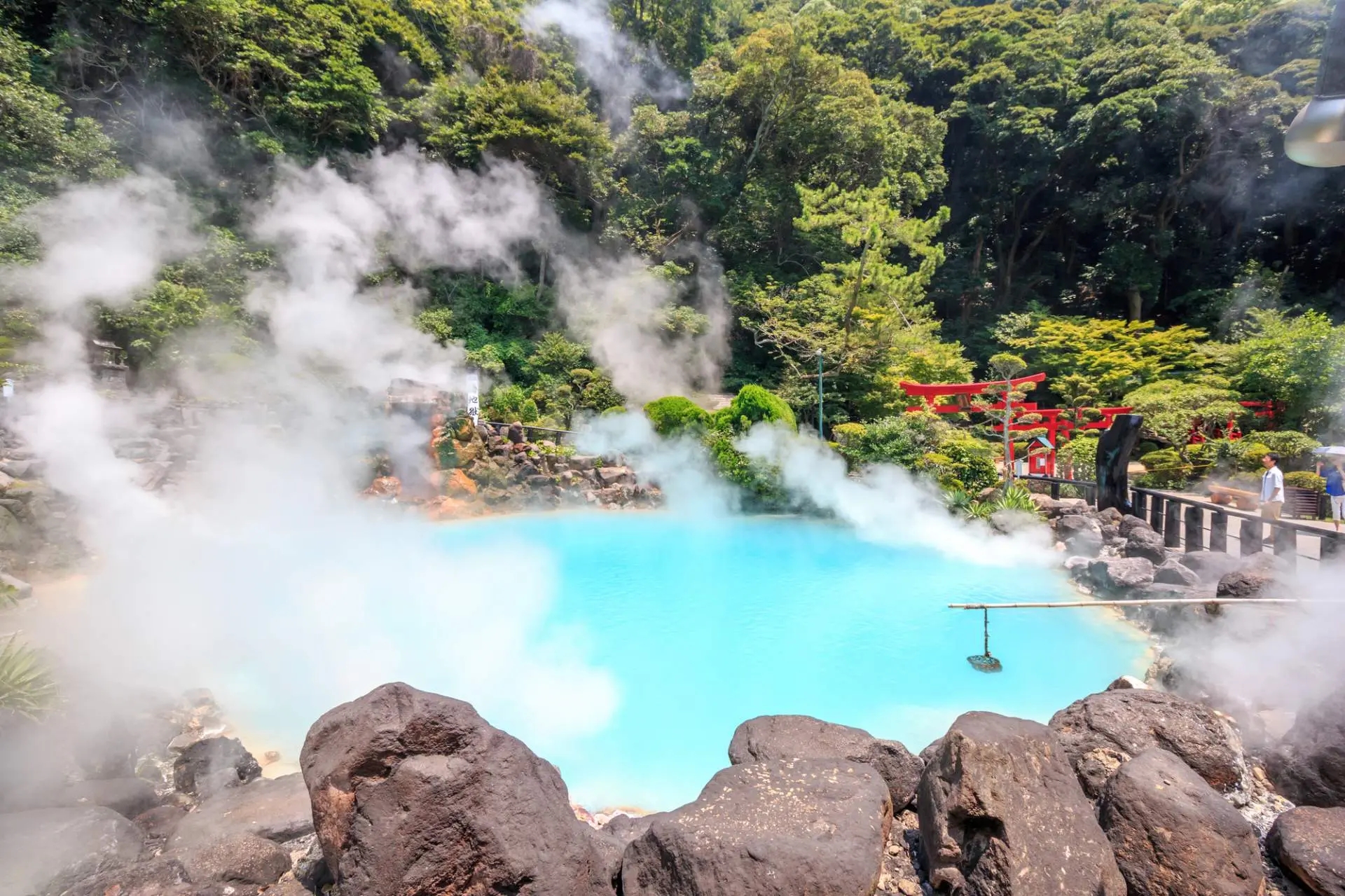
Beppu Onsen
Best Season: Autumn and Winter
Discharging more hot spring water than any other site in Japan, Beppu is the ultimate onsen kingdom. Beyond its therapeutic baths, it is globally famous for the “Hells of Beppu” (Jigoku Meguri)—a spectacular collection of geothermal hot springs featuring boiling blue waters, bubbling mud, and natural geysers.
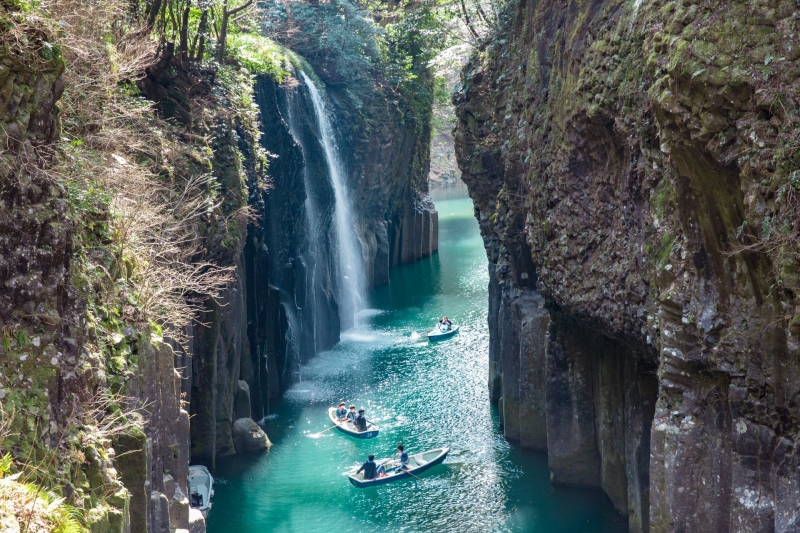
Takachiho Gorge
Best Season: Summer and Autumn
Formed by ancient volcanic basaltic columns from Mount Aso, Takachiho Gorge is a deeply spiritual ravine steeped in Japanese Shinto mythology. Visitors can rent a rowboat to glide along the tranquil, emerald green Gokase River, drifting directly beneath the spectacular 17-meter-tall Manai Falls cascading down the sheer cliffs.
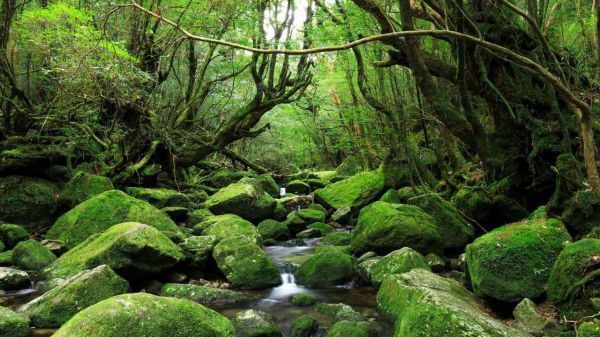
Yakushima Island
Best Season: Spring to Autumn
Registered as Japan’s very first UNESCO World Natural Heritage site, Yakushima is a magical island covered in a primeval rainforest. It is home to ancient “Yaku-sugi” cedar trees aged over 1,000 years, including the legendary Jomon Sugi. Its thick, vibrant green moss blankets served as the core landscape inspiration for Studio Ghibli’s “Princess Mononoke.”
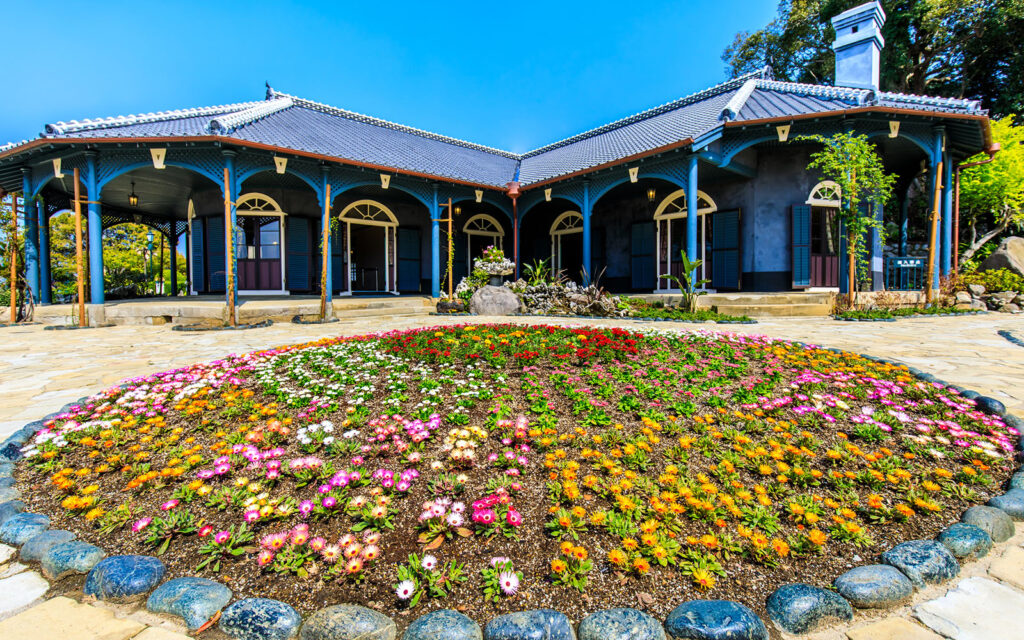
Nagasaki Peace Park & Glover Garden
Best Season: Spring and Autumn
Nagasaki is a historic port city uniquely blended with Western and Chinese cultural heritage due to its exclusive global trade history during Japan’s isolation era. Visitors can pay respects at the moving Peace Park, and then explore Glover Garden, a hillside open-air museum showcasing elegant 19th-century European merchant mansions.
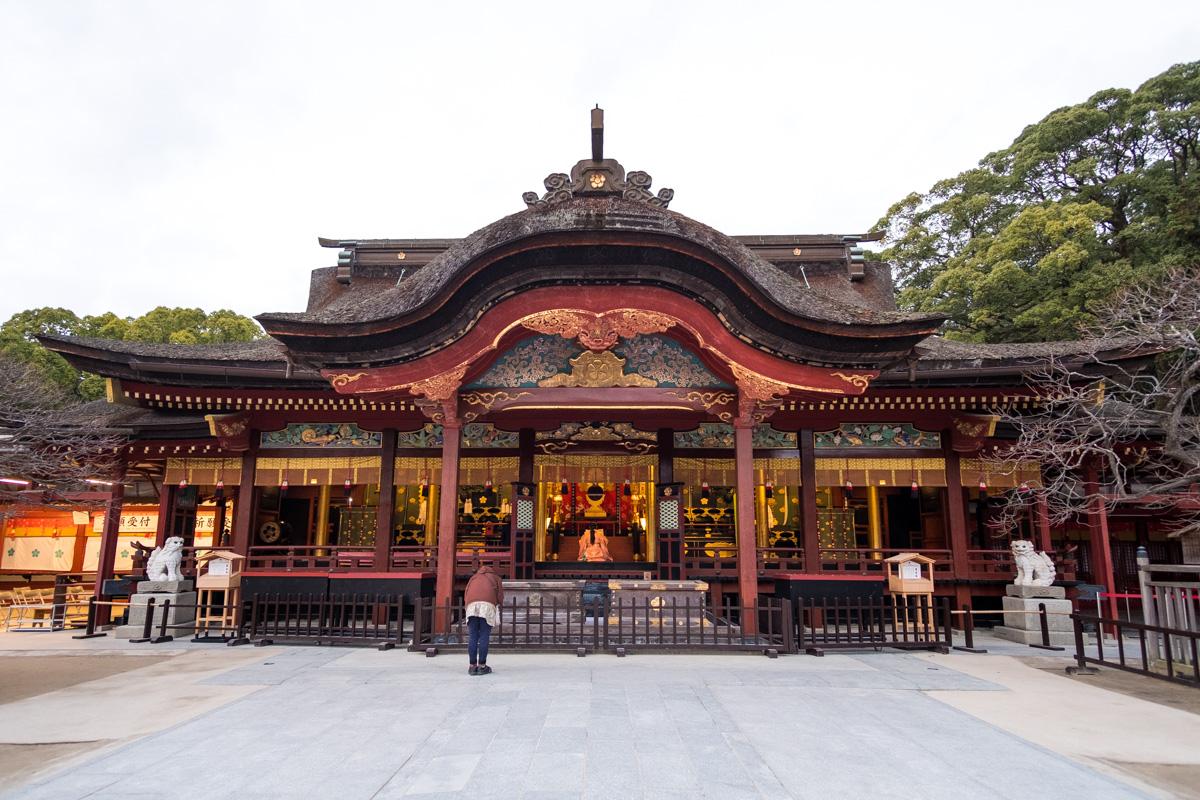
Dazaifu Tenmangu Shrine
Best Season: Spring
Perched high on Mount Katsuyama, this is one of Japan’s twelve remaining original castles. Completed in 1627, the complex features a formidable multi-tiered keep and highly sophisticated defense systems. Visitors can take a scenic ropeway up the mountain and explore the authentic wooden interiors of the samurai fortress.
Hidden Spots
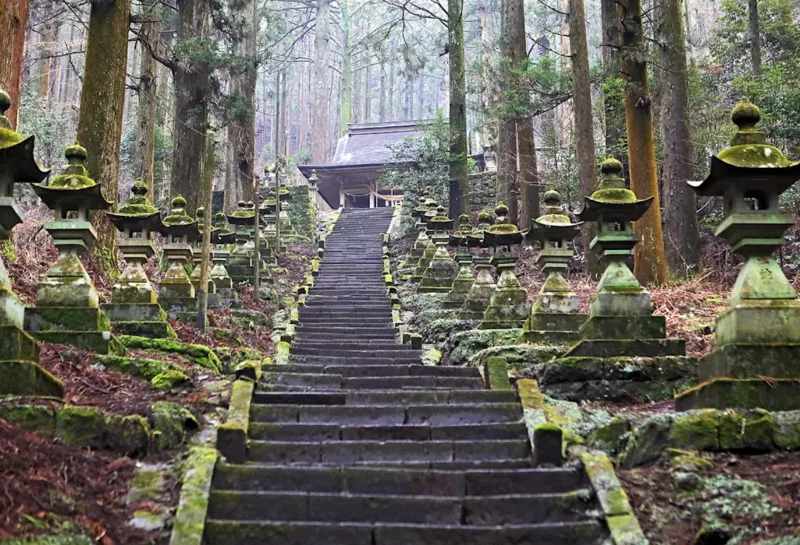
Kamishikimi Kumanoza Shrine
Best Season: Year-round
Tucked away in the cedar forests near Mount Aso, this ancient Shinto shrine feels like a portal into a mythical fantasy world. The approach features nearly 100 moss-covered stone lanterns standing like silent guardians, climbing gracefully up the mountain slope toward a rustic wooden sanctuary. It achieved global fame as the core visual inspiration for acclaimed anime films.
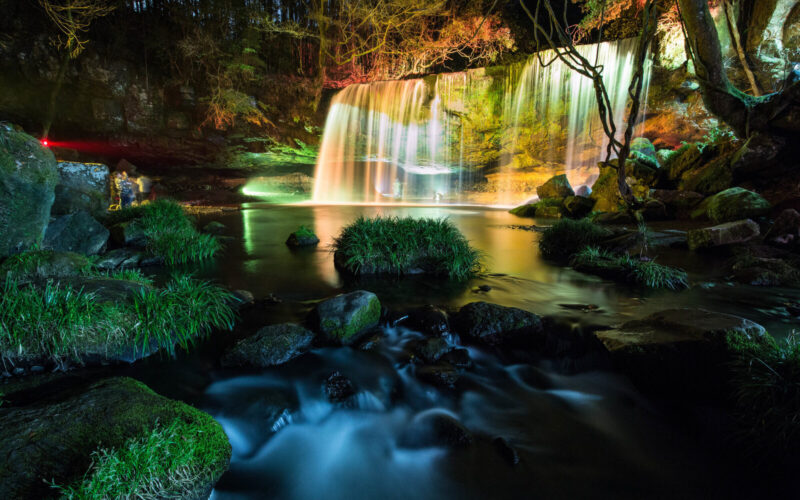
Nabegataki Falls
Best Season: Spring
Formed by a massive volcanic eruption of Mount Aso over 90,000 years ago, Nabegataki is a spectacular 10-meter-high, 20-meter-wide waterfall. What makes it incredibly unique is that a large hollow space behind the water column allows visitors to walk entirely behind the falls, offering a mesmerizing look through a natural “water curtain.”
Ogawa Falls
Best Season: Summer
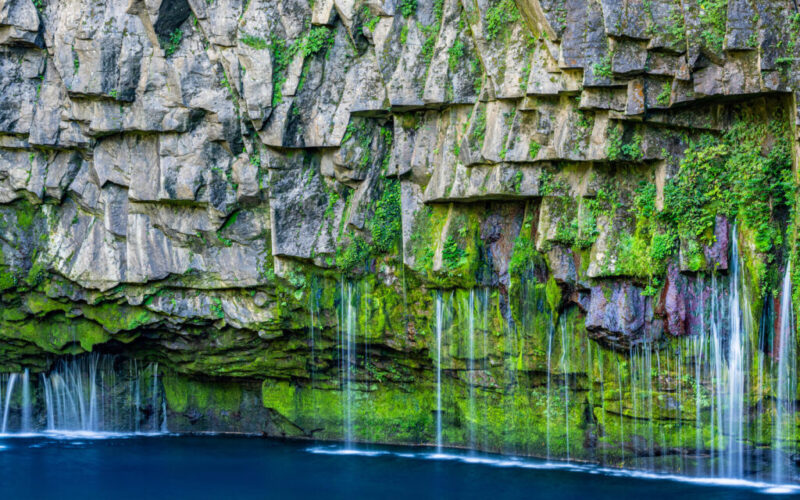
Hidden deep inside a rugged mountain valley at the southern tip of Kagoshima, Ogawa Falls is a breathtaking 46-meter-high waterfall. Rushing water filters gracefully through a massive, layered wall of crystalline rock pillars into a giant, perfectly calm basin that glows with an intense, magical emerald green color.
Inazumi Underwater Cave
Best Season: Year-round
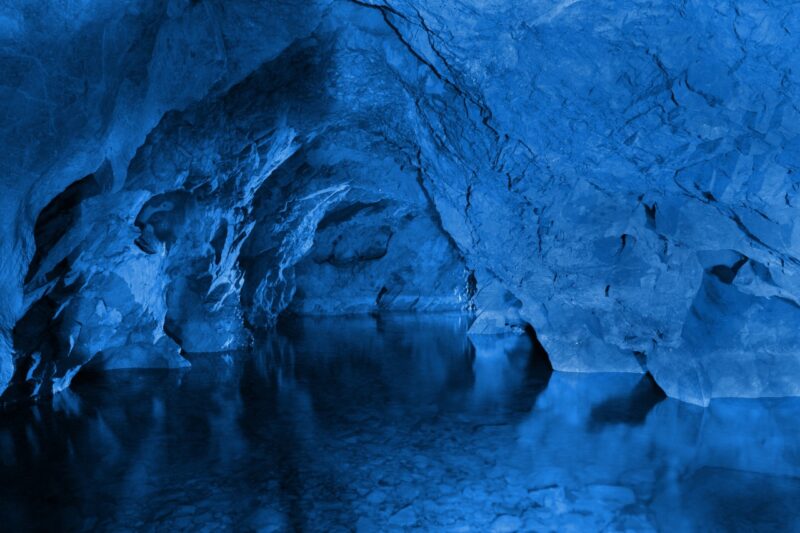
Submerged completely by a massive volcanic eruption around 300,000 years ago, Inazumi is Japan’s largest and most spectacular underwater limestone cave network. Visitors walk along well-illuminated steel pathways constructed directly above mysterious, bottomless underground rivers glowing with a deep blue light, showcasing ancient stalactites frozen inside the water.
Rakan-ji Temple
Best Season: Autumn
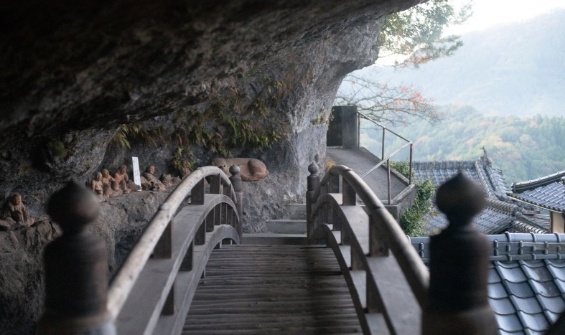
Carved directly into the sheer, jagged rock faces of the scenic Yabakei Valley, this ancient temple was founded in 1343. It serves as Japan’s premier head sanctuary for Rakan worship, housing over 3,700 historic stone Buddhist statues placed hidden inside various caves and rocky crevices, connected by an old-fashioned cliffside chairlift.
Nanatsugama Caves
Best Season: Spring to Autumn
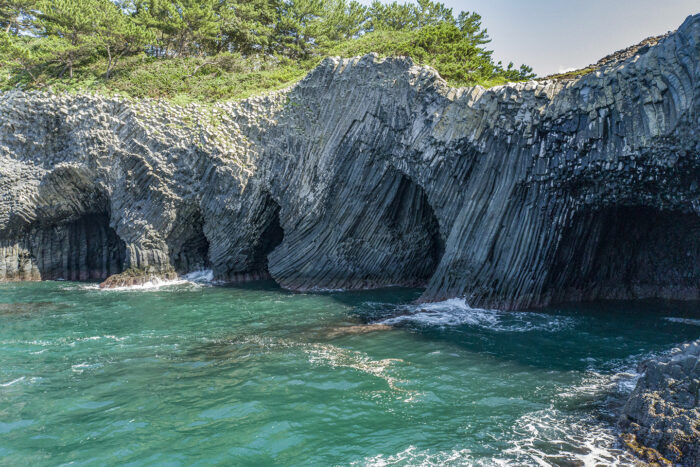
Sculpted over millennia by the rough, crashing waves of the Genkai Sea, Nanatsugama translates literally to “Seven Cauldrons.” It features a dramatic coastal cliff formed of sharp, volcanic basaltic columns, into which the ocean has masterfully carved seven spectacular, deep sea caves. Small excursion boats take visitors directly inside these narrow portals.
Must Try Foods
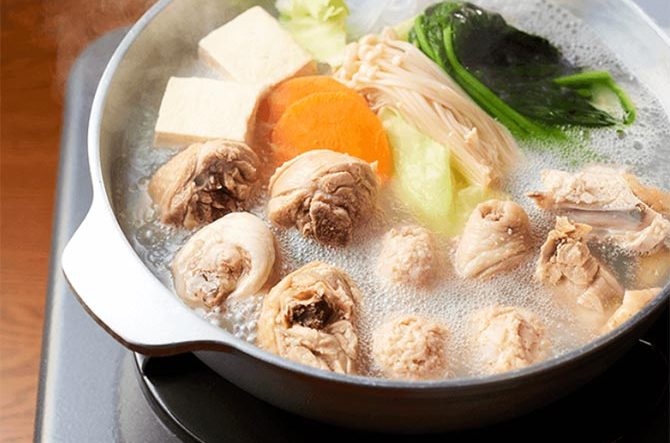
Hakata Mizutaki
A historic and elegant chicken hot pot from Fukuoka. The rich, cloudy broth is created by slowly simmering chicken bones and meat, served with fresh vegetables and citrus ponzu sauce. It offers a deeply comforting, nutritious, and umami-packed alternative to pork-based ramen.
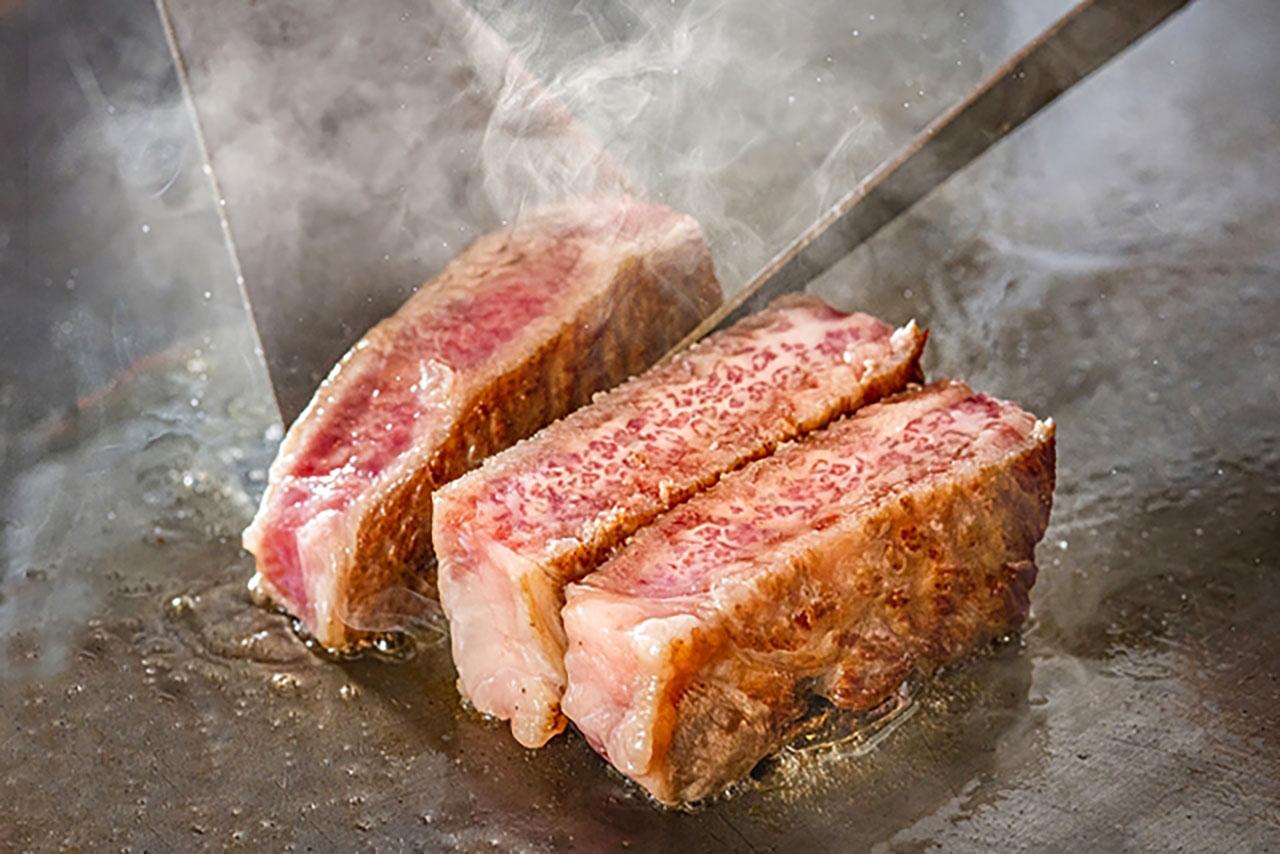
Saga Gyu
Ranked among Japan’s absolute top premium wagyu brands, Saga Beef is globally celebrated for its magnificent glossy marbling, incredibly soft texture, and rich, sweet flavor. Raised in a mild climate with clean water, it is perfect for luxurious steaks or Japanese sukiyaki.
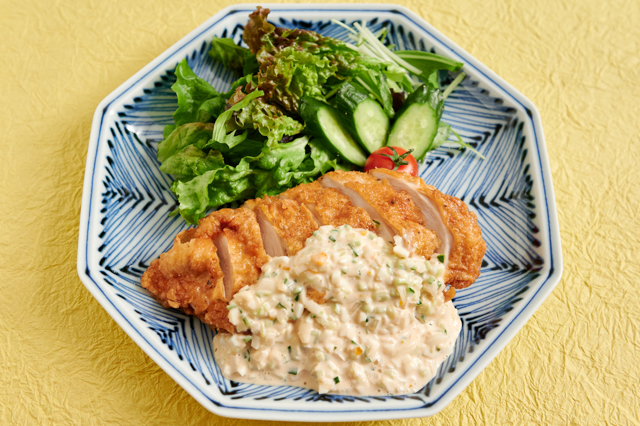
Miyazaki Chicken Nanban
Invented in Miyazaki Prefecture, Chicken Nanban is a highly comforting soul food. Tender chicken pieces are lightly battered, fried to a golden crisp, dipped immediately into a sweet, tangy vinegar glaze (nanban sauce), and then generously topped with a rich, creamy homemade tartar sauce.
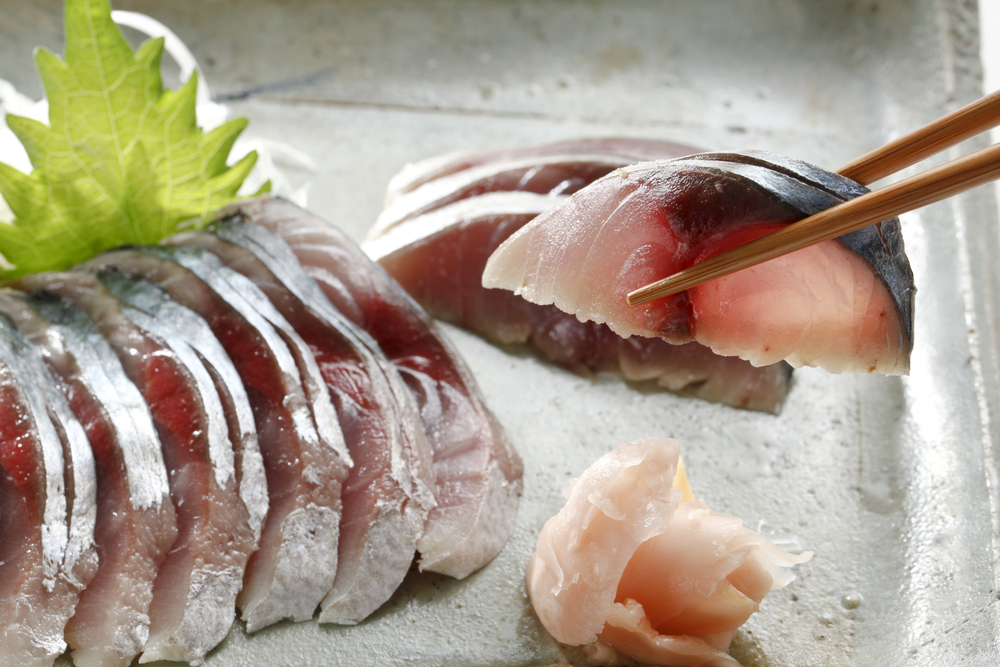
Oita Seki Saba
Caught in the rough, fast currents of the Hoyo Strait off the coast of Oita, Seki Saba is a legendary premium mackerel brand. Unlike typical mackerel, it is eaten incredibly fresh as sashimi, offering a unique firm, crunchy texture and a clean, sophisticated fat profile.

Hakata Amaou Strawberry Desserts
Fukuoka Prefecture is globally legendary for cultivating the “Amaou” strawberry, widely regarded as the king of Japanese berries. Local pastry chefs creatively incorporate these massive, intensely sweet, and juicy strawberries into decadent modern parfaits, refreshing soft-serve ice cream, and traditional sweets.
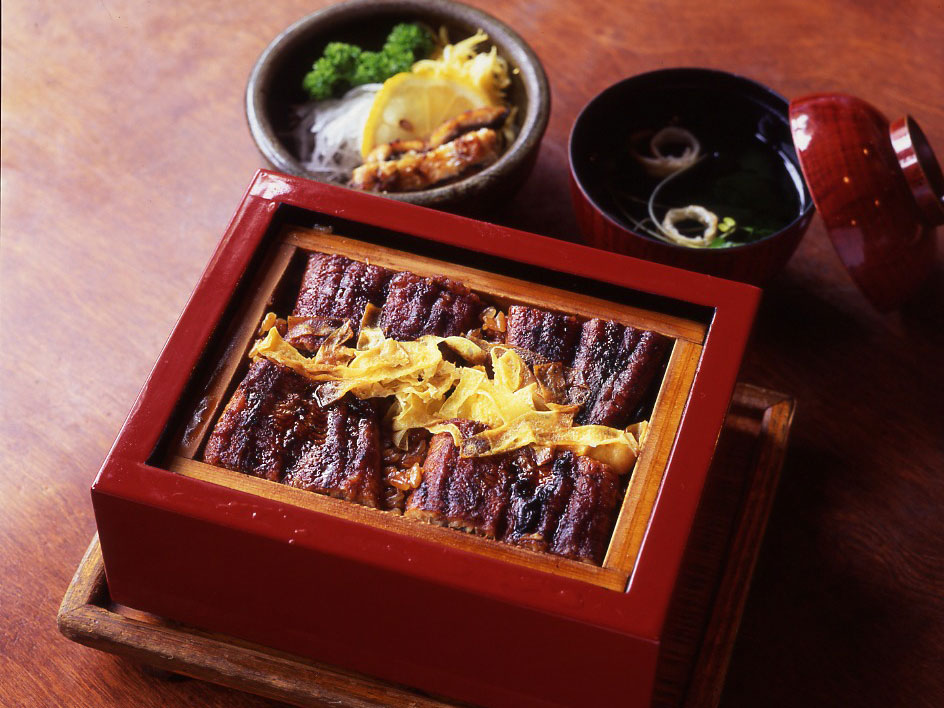
Yanagawa Unagi no Seiromushi
While typical Japanese unagi is simply grilled and served over rice, Yanagawa’s historic style involves cooking inside a traditional bamboo steaming box. Charcoal-grilled, sweet-glazed eel fillets are placed atop savory rice and bright yellow shredded egg, then steamed together. This creates an incredibly fluffy, melt-in-your-mouth texture and keeps the entire dish piping hot.