
Beyond the “Instagram Spot”: The Deep Spiritual History of Fushimi Inari Taisha


Fushimi Inari Taisha is universally famous for its beautiful, cascading vermilion gates and cute fox statues. However, behind these highly photogenic views lies a profoundly deep spiritual world backed by over 1,300 years of documented history. Far from being just an “Instagram spot,” Fushimi Inari is a living testament to human desire, cultural adaptation, and ancient nature worship. Let’s unearth the fascinating historical pillars that give this sanctuary its timeless weight.
1. The Four Deep Foundations of Fushimi Inari’s Legacy
To truly comprehend the scale and significance of Fushimi Inari, we must look past the surface and examine the core historical elements that shaped this sacred complex.
1. Immigrants & The Swan Legend (711)
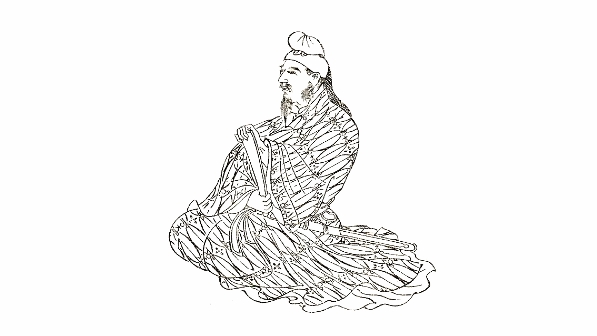
The foundation of Fushimi Inari dates back to 711, long before Kyoto became the imperial capital. According to the ancient text *Yamashiro Fudoki*, a wealthy leader of the Hata clan—a powerful immigrant family with advanced engineering skills—arrogantly used a sacred rice cake as a target for archery. Miraculously, the rice cake transformed into a white bird and flew to Mount Inari. Where it landed, rice (*Inari*) grew abundantly. Realizing they had disrespected the symbol of life, the clan fearfully enshrined the deity **Inari Okami** to beg for forgiveness and secure future harvests.
2. The True Deity: The Mountain Itself
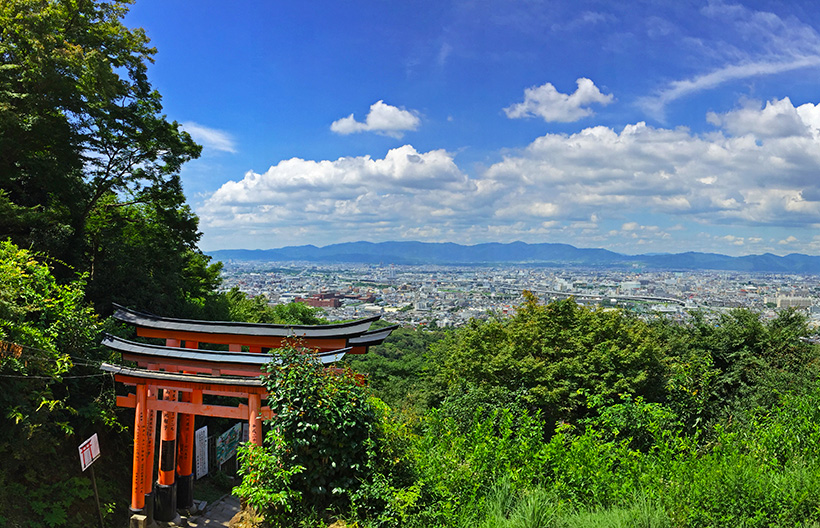
While millions of tourists pray at the beautiful Main Hall (*Honden*) at the base, the true essence of Fushimi Inari is **Mount Inari itself**. In ancient animism, the entire mountain was worshipped as a divine vessel (*Kannabi*) where gods descend. As you hike up the sacred paths (*O-yama Meguri*), you encounter tens of thousands of miniature stone altars called *O-tsuka*. Set up by individuals and companies over centuries, these altars turn the entire mountain into a massive, densely populated spiritual realm of co-existing deities.
3. Fox Messengers: Invisible Guardians
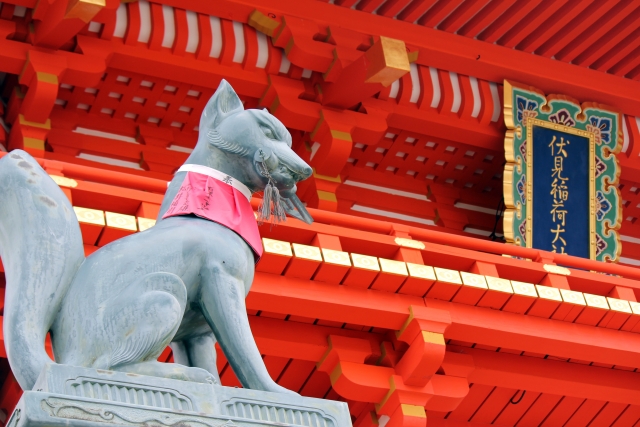
Contrary to popular belief, the foxes here are not gods, but the sacred messengers (*Kenzoku*) of Inari Okami. Furthermore, they are not ordinary wild foxes, but mythical **White Foxes (*Byakko*)**, believed to be completely invisible to human eyes. If you look closely at what these silent guardians hold in their mouths, you will discover four profound spiritual meanings:
- • Rice Ear:
- The ultimate symbol of agricultural abundance and sustenance.
- • Key:
- The key to the sacred granary, or the tool to unlock divine blessings.
- • Jewel (Tama):
- The physical manifestation of the deity’s spiritual power and wish-fulfillment.
- • Scroll:
- The hidden wisdom of the gods and sacred teachings.
4. Senbon Torii: The Gratitude Tunnel
The world-famous crimson tunnel was not built by the shrine for tourism. It began during the Edo Period as a grassroots custom among worshippers. Because the word for gate (*Torii*) sounds identical to the Japanese verb *Toru* (meaning “to pass through” or “to accomplish a goal”), merchants and commoners began donating gates to signify that their prayers had successfully passed through. Over centuries of business successes, this tradition grew into the spectacular maze of over 10,000 gates we see today.
2. The Evolution of a Adaptive Deity
How a simple agricultural shrine transformed into Japan’s ultimate economic powerhouse is a fascinating lesson in cultural survival and evolution.
The Ancient Science Behind the Vermilion Red
The bright orange-red color coating the gates is known as *Cinnabar Red*. Beyond its spiritual purpose of warding off evil spirits and dark forces, the color possessed a highly practical, scientific background. The traditional pigment contains mercury, which historically acted as a heavy-duty wood preservative. It effectively protected the thousands of outdoor wooden structures from moisture, rot, and boring insects in Kyoto’s humid mountain climate.
The Transition to Business Prosperity
As Japan steadily transformed from an agricultural society into a commercial empire during the Edo Period, the shrine seamlessly adapted. Worshippers shifted from praying for a “good rice harvest” to begging for “business prosperity.” Merchants from Kyoto and Osaka flooded the mountain, recognizing that the focus, discipline, and regular gratitude required for farming translated perfectly into economic strategy.
💡 Traveler’s Benefit Note: When you walk through Fushimi Inari today, remember that you are walking through a monument built by the raw passion of everyday people. The thousands of black inscriptions on the back of the gates are not decorative text; they are the real names of modern business owners and families thanking the universe for their survival and success. It is a living map of human gratitude.